
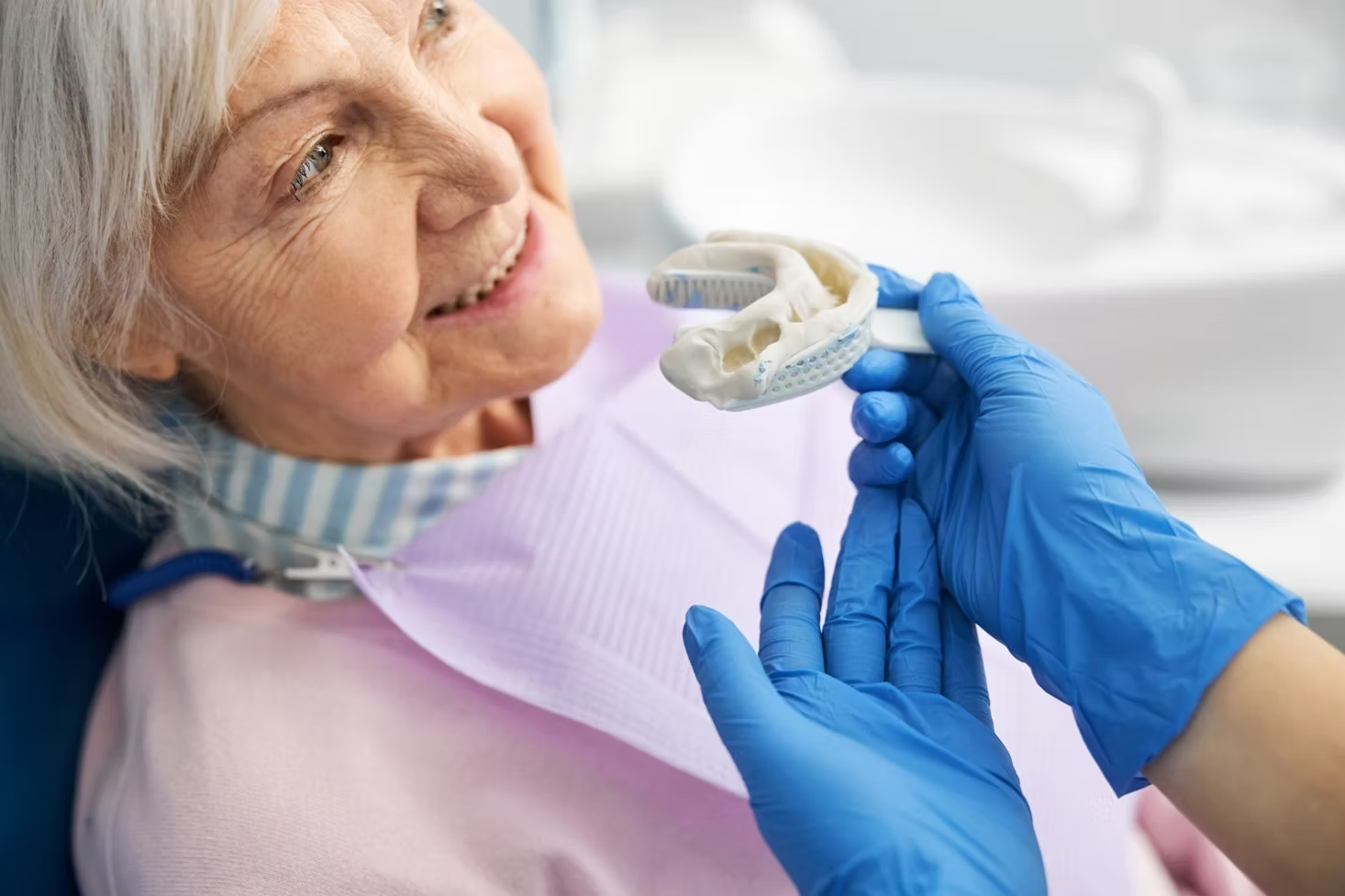
If you are missing teeth, one of the first decisions you may face is whether you need partial dentures or full dentures. While both solutions restore function and appearance, they are used in different situations depending on how many natural teeth remain. Understanding the differences between partial and full dentures can help you choose the most appropriate option for your oral health and lifestyle. At Parisien Denture Clinic in Windsor, Ontario, our denture specialist has over 25 years of experience crafting custom-fitted dentures. They have helped thousands of patients regain their confidence with natural-looking, comfortable solutions.
Understanding Partial Dentures
Partial dentures are an excellent option for individuals who have lost some, but not all, of their natural teeth. These removable appliances seamlessly fill in gaps, restoring both aesthetics and functionality.
Key Features of Partial Dentures:
• Replace one or more missing teeth.
• Securely attach to existing natural teeth for support.
• Removable for easy cleaning and maintenance.
• Typically made with a combination of acrylic and metal for durability.
Who should consider partial dentures?
If you still have healthy natural teeth, partial dentures help prevent them from shifting out of place, ensuring proper bite alignment and maintaining oral structure.
At Parisien Denture Clinic, we meticulously design custom-fitted partial dentures that blend seamlessly with your natural teeth, ensuring comfort, stability, and a natural appearance.
Full Dentures: A Complete Restoration
Full dentures provide a comprehensive replacement solution for individuals who have lost all teeth in an arch (upper, lower, or both). These custom-made prosthetics restore the look and function of natural teeth.
Characteristics of Full Dentures:
• Replace all teeth in an arch.
• Rest directly on the gums.
• Available in conventional or immediate options (placed after extraction).
• Require periodic adjustments for the best fit.
Who should consider full dentures?
When all your natural teeth are missing or need to be extracted due to severe decay or gum disease, full dentures restore oral function, allowing you to eat, speak, and smile with confidence.
At Parisien Denture Clinic, we take a personalized approach to crafting dentures that look natural, feel comfortable, and function seamlessly. For those seeking unmatched precision and comfort, our digital dentures provide a highly accurate, custom-designed fit tailored to your unique needs.
With our on-site lab, we ensure exceptional craftsmanship, efficiency, and precision in every denture we create, delivering results that restore both confidence and quality of life.
Partial Dentures vs Full Dentures
| Partial Dentures | Full Dentures |
|---|---|
| Replace several missing teeth | Replace all teeth in an arch |
| Attach to remaining natural teeth | Sit on the gums |
| Preserve existing teeth | Used when all teeth are missing |
| Often smaller and lighter | Full arch restoration |
FAQ:
Are partial dentures more comfortable than full dentures?
Comfort varies depending on the case, but partial dentures often feel more stable because they attach to remaining teeth.
Can partial dentures become full dentures later?
Yes. If additional teeth are lost over time, treatment may shift toward a full denture.
How long do dentures last?
Most dentures last 5–10 years, depending on wear and changes in jawbone structure.
Are partial dentures removable?
Yes, most partial dentures are removable, although some implant-supported options may provide additional stability.
Making the Right Choice: Factors to Consider
Deciding between partial and full dentures depends on several factors:
- Number of Missing Teeth: Partial dentures are ideal for those with some healthy teeth remaining, whereas full dentures are necessary when all teeth are missing or require removal.
- Oral Health Condition: The health of your remaining teeth and gums will determine whether you can support a partial denture or require full dentures.
- Bone Density & Age: While age is not a deciding factor, bone density may impact the fit and stability of your dentures.
- Lifestyle & Personal Preferences: Some individuals prefer the stability of partial dentures, while others opt for the comprehensive restoration of full dentures.
- Budget Considerations: Partial dentures are cost-effective initially, but in some cases, full dentures may be a better long-term investment for oral health.
Restore Your Smile with Confidence
Beyond traditional dentures, Parisien Denture Clinic offers a range of advanced solutions to enhance comfort and functionality. Our implant-retained dentures provide superior stability, ensuring a secure fit for everyday confidence.
We specialize in denture relines and repairs, helping to maintain an optimal fit and extend the longevity of your dentures. We also provide teeth whitening services to brighten your smile and anti-snoring/sleep apnea devices to improve your oral health and well-being.
Patients in Windsor, LaSalle, Amherstburg, Essex, and Kingsville frequently ask whether partial or full dentures are the best solution for their situation. Choosing the right denture solution is a life-changing decision that impacts your comfort and confidence. At Parisien Denture Clinic, we are committed to guiding you through the process and ensuring you receive custom-crafted dentures.
Contact us today to schedule a consultation and take the first step toward restoring your beautiful, natural-looking smile.
