
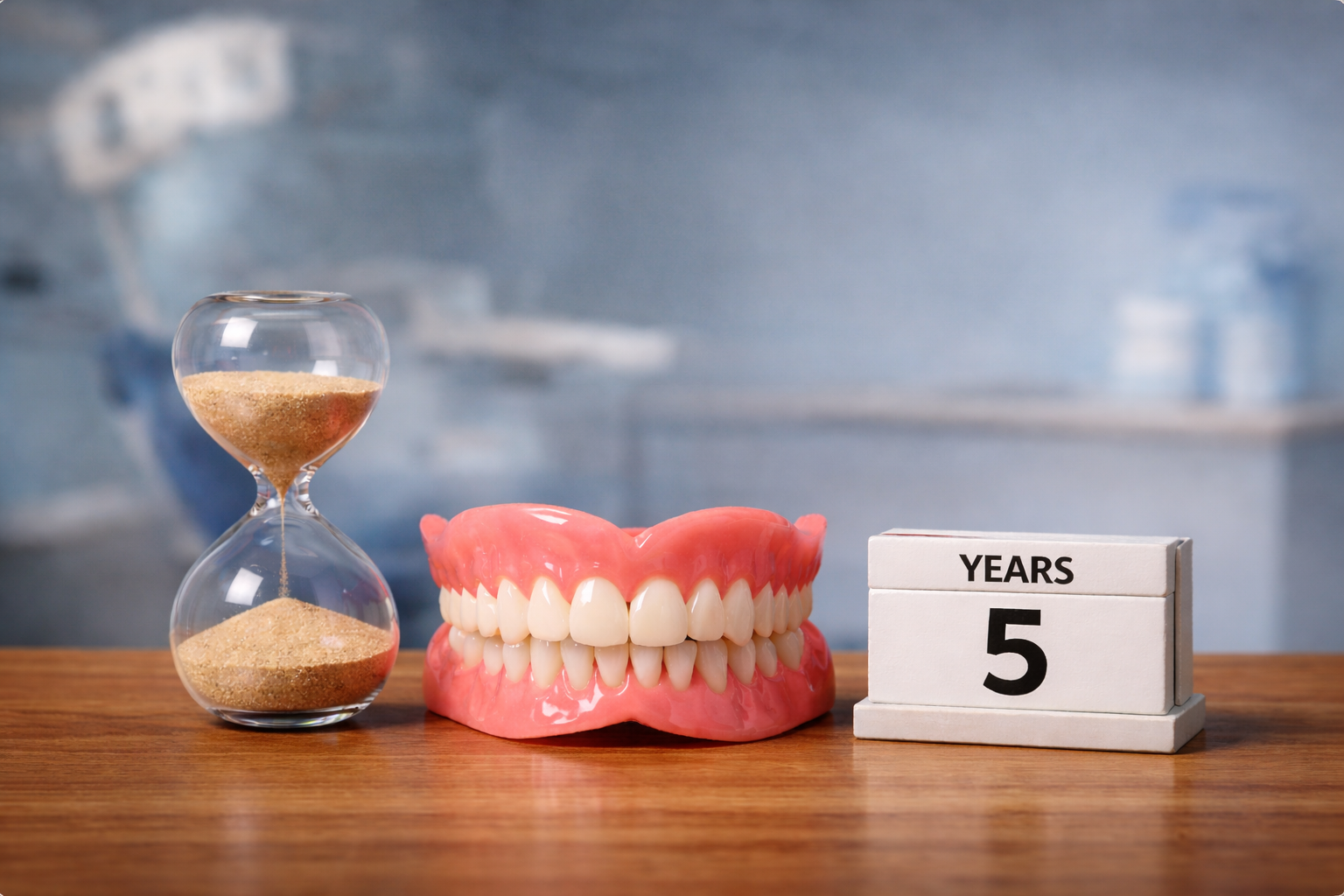
How Long Do Dentures Last?
For many people considering dentures, one of the most common questions is how long dentures will last. While dentures are designed to be durable and long-lasting, they are not permanent and will eventually need to be replaced or adjusted. Understanding what affects the lifespan of dentures can help you maintain them properly and know when it may be time to visit a denturist.
Average Lifespan of Dentures
In most cases, dentures last on average 5 years. Better quality, premium teeth can last 8-10 years. Over time, normal wear and changes in the mouth can affect how dentures fit and function.
Several factors influence how long dentures last, including:
-
Changes in the jawbone and gum tissue
-
Everyday wear from chewing and speaking
-
The materials used to create the dentures
-
How well the dentures are maintained
- How strong your bite is
- Clenching or grinding her teeth
Even when dentures remain structurally intact, the natural changes that occur in the mouth may mean they no longer fit as comfortably as they once did.
Why Dentures Need Replacement Over Time
One of the biggest reasons dentures need replacement is bone resorption, which is the gradual shrinking of the jawbone after teeth are lost. Without natural tooth roots to stimulate the bone, the shape of the jaw slowly changes.
As the jawbone changes, dentures may:
-
Become loose
-
Shift during speaking or eating
-
Cause sore spots or irritation
-
Lose their proper alignment
When dentures no longer fit correctly, adjustments, relines, or replacement may be recommended.
Signs Your Dentures May Need to Be Replaced
There are several signs that it may be time to have your dentures evaluated.
Common indicators include:
-
Dentures feel loose or unstable
-
Difficulty chewing certain foods
-
Persistent sore spots or irritation
-
Visible wear or cracks in the denture base or teeth
-
Changes in speech
-
Facial appearance beginning to look sunken or collapsed
If you notice any of these issues, a denturist can assess the condition of your dentures and recommend the appropriate solution.
Can Dentures Be Adjusted Instead of Replaced?
In some cases, dentures may not need to be completely replaced. A denture reline or adjustment can sometimes restore a better fit.
A denture reline involves reshaping the inner surface of the denture so it fits more closely to the gums. This can improve comfort and stability when the denture becomes loose due to changes in the jawbone.
However, if dentures are significantly worn or damaged, replacement may be the better long-term option.
Tips to Help Dentures Last Longer
Proper care and maintenance can help extend the lifespan of dentures.
Helpful habits include:
-
Cleaning dentures daily using a denture brush and cleanser
-
Removing dentures overnight to allow oral tissues to rest
-
Storing dentures in water when not in use
-
Avoiding extremely hard foods that could damage denture teeth
-
Scheduling regular checkups with a denturist
Regular professional evaluations allow small problems to be addressed before they become larger issues.
Modern Denture Options
Advances in denture technology have improved comfort and durability for many patients. Options such as digital dentures and implant-supported dentures can offer improved fit, stability, and long-term function.
A denturist can help determine which type of denture is most appropriate based on your individual needs and oral health.
Frequently Asked Questions About Denture Lifespan
How often should dentures be replaced?
Most dentures need to be replaced every 5 to 10 years, although adjustments or relines may be needed sooner.
Can dentures last longer than 10 years?
Some dentures may last longer with proper care, but changes in the jawbone and oral tissues often make replacement necessary over time.
Do full dentures and partial dentures last the same amount of time?
Both types typically have similar lifespans, although the condition of remaining natural teeth can affect how long partial dentures remain functional.
What happens if dentures are worn too long?
Wearing dentures that no longer fit properly can cause irritation, difficulty chewing, and changes in facial appearance.
When to See a Denturist
Regular denture checkups are important to ensure proper fit and function. Even if dentures feel comfortable, periodic evaluation helps identify wear or changes in the mouth that may affect long-term oral health.
If you have questions about the condition of your dentures or are experiencing discomfort, a consultation with a denturist can help determine whether adjustments, relines, or replacement are recommended.
